September 18, 2026
She Wasn't a Wheelchair. She Was a Student.
What’s a Rich Text element?
What’s a Rich Text element?
What’s a Rich Text element?
What’s a Rich Text element?
What’s a Rich Text element?
What’s a Rich Text element?
The rich text element allows you to create and format headings, paragraphs, blockquotes, images, and video all in one place instead of having to add and format them individually. Just double-click and easily create content.
- testing number bullets
- and two
- and now threeee
Static and dynamic content editing
A rich text element can be used with static or dynamic content. For static content, just drop it into any page and begin editing. For dynamic content, add a rich text field to any collection and then connect a rich text element to that field in the settings panel. Voila!
- Testnig one bullet
- two bullets
- and now three

How to customize formatting for each rich text
Headings, paragraphs, blockquotes, figures, images, and figure captions can all be styled after a class is added to the rich text element using the "When inside of" nested selector system.
How a Wisconsin Family Found the School That Finally Saw Their Daughter.
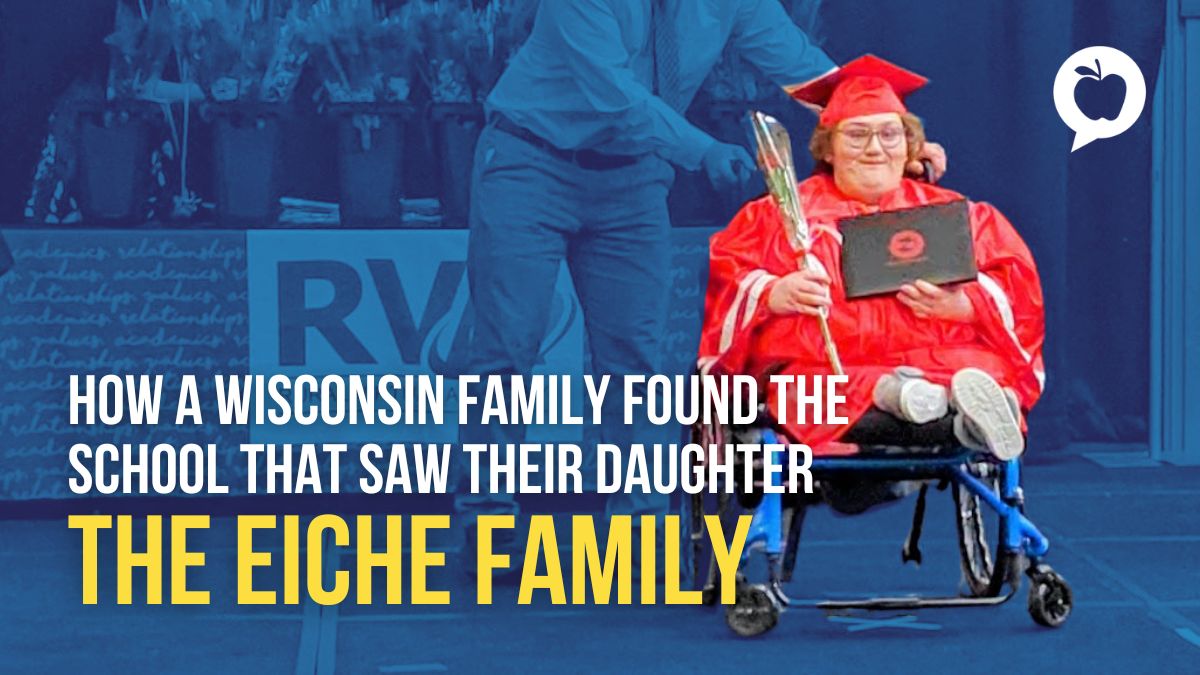
When Namine Eiche wheeled across the graduation stage this spring with high honors, her parents saw more than a diploma. They saw every hospital hallway. Every canceled recess. Every homework packet completed from a post-op recovery bed. They saw flashbacks of their small family unit who refused to let brick-and-mortar assumptions define their daughter's future.
Namine was born with three major birth defects. The most serious was a heart condition that required a three-stage surgical repair. The first operation came at two weeks old. The second at six months. The third right after she turned five. In between hospital stays, her mother, Jessica, and her father, Paul, tried to give her the childhood every parent wants for their kid. Then it was time for school.
Brick and Mortar Attempt
Namine started 3-K at a traditional Wisconsin public school. Within three months, the Eiches pulled her out. "Schools are germ factories," Jessica said. "She got really sick, a lot. We were in and out of urgent care, the ER. Her body just couldn't handle it."
Kindergarten started with promise. Namine loved school. She loved learning. Then, suddenly, she was making excuses to stay home.
Jessica and Paul found out their daughter was being bullied. Not just by classmates, but by adults on staff. Teachers wouldn't let her play on the playground. They made her wheel up and down the sidewalk while other kids ran. So the Eiches pulled her out again.
Jessica has a bachelor's degree in education. She figured she'd teach Namine herself. "I was resigned to it," she said. Paul told her they'd take it one day at a time. Another heart surgery was on the calendar. The curriculum was expensive. Doubt crept in.
"I knew what curriculum I wanted, but buying it for myself was really expensive," Jessica said. "And I wondered, how am I going to teach it if I don't fully understand everything?"
The Waiting Room That Changed Everything
The answer came in a therapy waiting room.
Jessica noticed another mom whose child was doing schoolwork while her siblings were in therapy. The two got to talking. That mother introduced Jessica to virtual school, a full-time, tuition-free public school option available in Wisconsin.
"I thought it was really interesting," Jessica said. "How are you in school while your other kids are in therapy? She told me about virtual school. I thought it might be an option for our child."
The Eiches contacted a Wisconsin virtual academy in the fall of Namine's kindergarten year. Within two months of enrolling, teachers told them Namine was developmentally ready for first grade.
The transformation was immediate. And it wasn't just academic.
"In 4-K we were told she had a learning disability, that she was behind, that she wasn't learning at the pace of her peers," Jessica said. "But when we sat down with the virtual school teachers, she excelled. Her thirst for knowledge had never been quenched. That's why there had been problems."
Paul saw it, too. The light came back on.
What Flexibility Actually Looks Like
For a family navigating major medical care, "flexibility" isn't a buzzword. It's the difference between a child graduating on time and one being held back for reasons that have nothing to do with intelligence.
The virtual school ran on a four-day schedule with the fifth day available for catch-up. If Namine had a cardiology appointment, she brought her books. If she was too tired to log on, class could wait until morning. When a surgery kept her out for two weeks post-op, her teachers built a plan that let her rejoin her peers without missing a beat.
"We didn't have to worry about her falling behind," Jessica said. "It was a sigh of relief as a parent. If my daughter had had to stick to a strict schedule, she would still be in school. She would have been held back."
Paul remembers teachers doing something even more remarkable. When Namine's health flared, they cut the non-essential work and gave her only the core assignments needed to master the material.
Finally Seen as a Person
Traditional school placed Namine in the wrong box before she got a chance to open it.
"They had a single place for special ed kids, whether physical, mental, or learning. A one-size-fits-all approach that would not have fulfilled her academically," Jessica said. "That's where she would have been put, even though she didn't fit that category. Virtual school saw her as a person, not a wheelchair."
Freed from that box, Namine made friends across Wisconsin. Her world widened. Her pace steadied. Her honors stacked up. And in June 2026, she graduated ready for whatever comes next - perhaps a dream career as an author.
From Family Fight to Family Advocacy
The Eiches didn't set out to become advocates. Then Jessica saw the pattern everywhere. Coworkers whose kids needed flexibility. Families in her city fighting for the same accommodations she'd fought for.
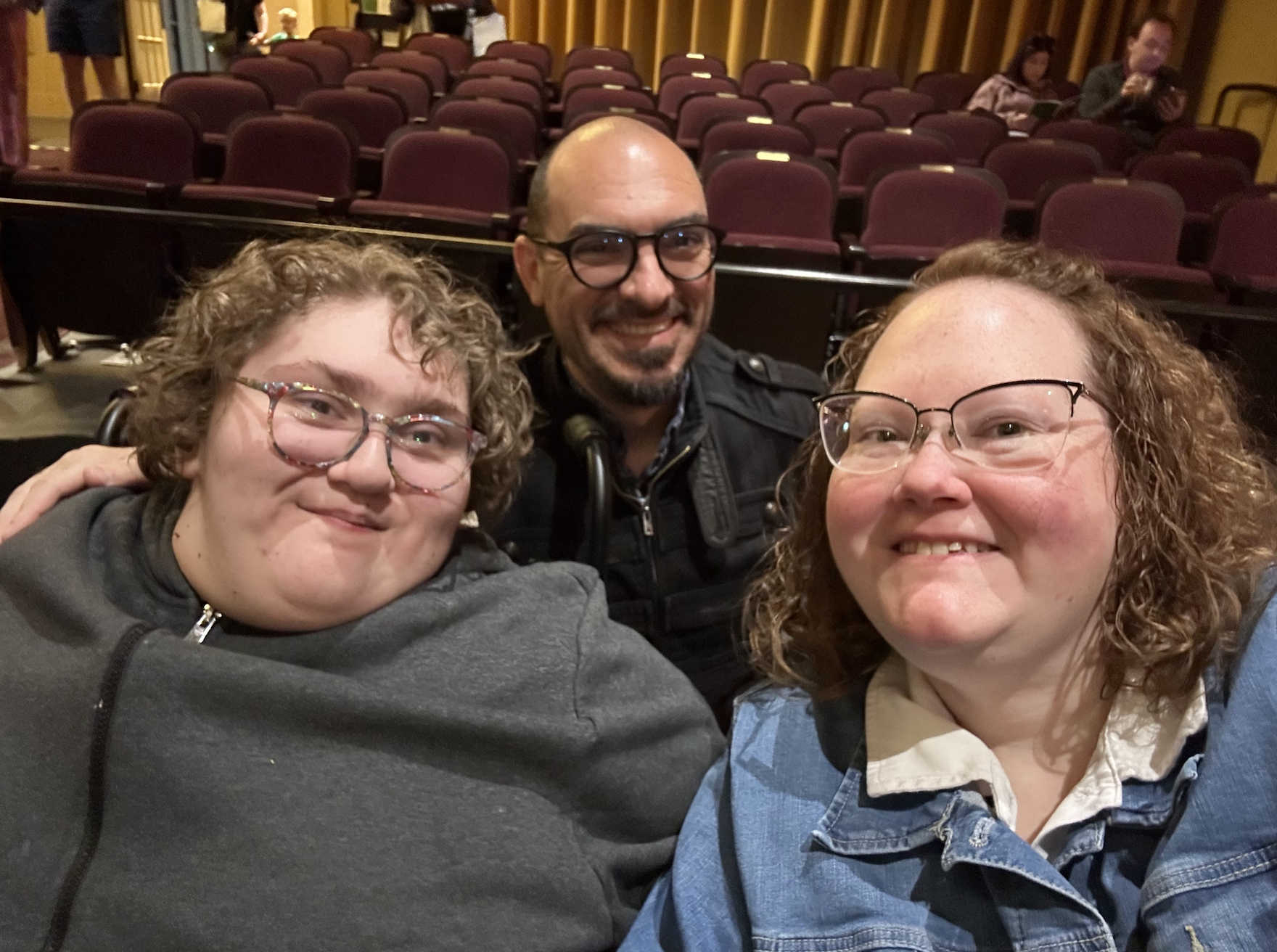
A Capitol Day email from Namine's virtual school introduced the Eiches to PSO's Luke Martz in Madison. That introduction led the family to Parents for School Options' Parent Leadership Conference (PLC) in Washington, DC.
"That's what we're here for," Jessica said. "That's what we want to see for everyone. The light for learning our daughter has… we want all kids to have it. It shouldn't just be for some. It should be for all."
At PLC, the Eiches learned they weren't the only Wisconsin family pressing for change. They'd been asking their city representatives about free and reduced lunch access for virtual students. PSO was fighting the same fight nationally.
Today, the Eiches sit down with Wisconsin legislators and tell them what families across the state need lawmakers to hear. Virtual school flexibility isn't a nice-to-have. For a child with major medical needs, it's the difference between graduating and giving up.
"Kids need to be seen as individuals," Jessica said, "not a number."
Namine was. And that changed everything.