
December 4, 2025
Remote Testing Case Study: Expanding Access, Reducing Barriers
.jpg)
What’s a Rich Text element?
What’s a Rich Text element?
What’s a Rich Text element?
What’s a Rich Text element?
What’s a Rich Text element?
What’s a Rich Text element?
The rich text element allows you to create and format headings, paragraphs, blockquotes, images, and video all in one place instead of having to add and format them individually. Just double-click and easily create content.
- testing number bullets
- and two
- and now threeee
Static and dynamic content editing
A rich text element can be used with static or dynamic content. For static content, just drop it into any page and begin editing. For dynamic content, add a rich text field to any collection and then connect a rich text element to that field in the settings panel. Voila!
- Testnig one bullet
- two bullets
- and now three

How to customize formatting for each rich text
Headings, paragraphs, blockquotes, figures, images, and figure captions can all be styled after a class is added to the rich text element using the "When inside of" nested selector system.
Sitting for a state test can be a universally stressful and nerve-wracking experience for all students. For virtual students, testing is often much more complicated, and more akin to an obstacle course. While their learning and classroom experience happens at home, many states still require students to travel, sometimes hours away, to a physical testing site. Parents are required to take time off work. Siblings need to be put in childcare. Families in rural communities face hotel stays and multi-day disruptions, sometimes multiple times per year.
The result? A testing requirement designed for brick-and-mortar schools becomes a roadblock for students who learn differently.
PSO has been leading the charge to change testing requirements for virtual students. Our coalitions have successfully passed remote-proctored testing policies in more than a dozen states. In 2025, our teams in Washington, Iowa and Missouri added three more states to the growing list. This is how they turned advocacy into action.
Each win reflects years of parent advocacy, shifting public understanding, and bipartisan recognition that outdated policies shouldn’t prevent students from demonstrating what they’ve learned.
Understanding the Issue
Remote-proctored testing, which allows virtual students to take their state-mandated exams at home or in another approved online setting, is one of the most practical, equitable, and commonsense issues we champion. The flexibility of online testing accommodates a variety of learning styles and needs, allowing students to perform at their best.
A Level Playing Field
Right now, undue burdens are placed on the families of virtual students, as parents and caregivers are required to take time off of work and arrange for childcare for their other children in order to accompany their student to the test. In rural areas, the nearest testing facility may be several hours away, requiring families to stay in a hotel or drive long distances. In addition, households with multiple children enrolled in virtual school but in different classes or grades may also be required to make several trips to testing facilities based on each child’s testing schedule.
Beyond the logistical nightmare placed on some families, students with disabilities, health or medical issues face unique challenges associated with testing in person. Care might need to be delayed, or special accommodations that the student needs may not be provided.
Remote testing ensures virtual students are evaluated fairly, without transportation barriers, scheduling conflicts, or long-distance travel that traditional school students never face.
A Better Testing Experience for Virtual Learners
Students who learn online every day naturally perform better in environments familiar to them. Research backs this up: studies from the Education Freedom Institute show that remote testing more accurately reflects what virtual students know and can do.
Safe, Secure, and Modern
Teachers use secure technology and live video proctoring, following strict state and federal testing rules. And remote testing is already commonly used in other high stakes tests, including the Law School Admissions Test (LSAT), Praxis teaching certification exams, GRE exams and College Level Examination Program (CLEP).
Families + Lawmakers Deliver a Landmark Win in Washington
In Washington State, our friends at the Digital Public Schools Alliance (DPSA) helped lead one of the strongest remote testing pushes in the country.
Strategy and Parent Mobilization
Two key bills (SB 5193 and HB 1079) were introduced to give online students the right to take state tests remotely.
From the first hearing, parents dominated the conversation. Firstly, DPSA Board President Felica Kern and Board Member James Perry delivered powerful testimony. In addition, hundreds of parents signed in to support the bills, registering official public backing. Families emailed, called, and met with lawmakers throughout the session.
Their message was simple and compelling: testing should not require a tank of gas, a missed shift, and a hotel room.
The Win
On May 13, Governor Ferguson signed remote testing into law. DPSA leaders, students, and families stood beside him at the signing ceremony, an image that captured the spirit of this victory. Washington’s success confirmed that bipartisan, parent-driven advocacy can modernize education policy in real time.
Victories for Virtual School Families Sweep Missouri and Iowa
Missouri Parents for School Options advocates made their presence known in the statehouse this year, testifying on multiple occasions in several committees to secure the passage of remote-proctored testing legislation.
It was a long road to getting here in Missouri. Two bills were introduced to support remote testing – House Bill 220 and Senate Bill 266. Neither bill independently achieved Truly Agreed and Finally Passed (TAFP) status, a requirement for a bill to become law. PSO-MO continued to advocate, and were able to work with lawmakers to include remote-proctored testing provisions into other education omnibus bills.
In addition to advocacy at the statehouse, PSO secured prominent news stories on the issue, including a TV story on the local St. Louis Fox affiliate. The issue was also discussed by House Bill 220 sponsor, Rep. Ed Lewis, on KMOX radio.
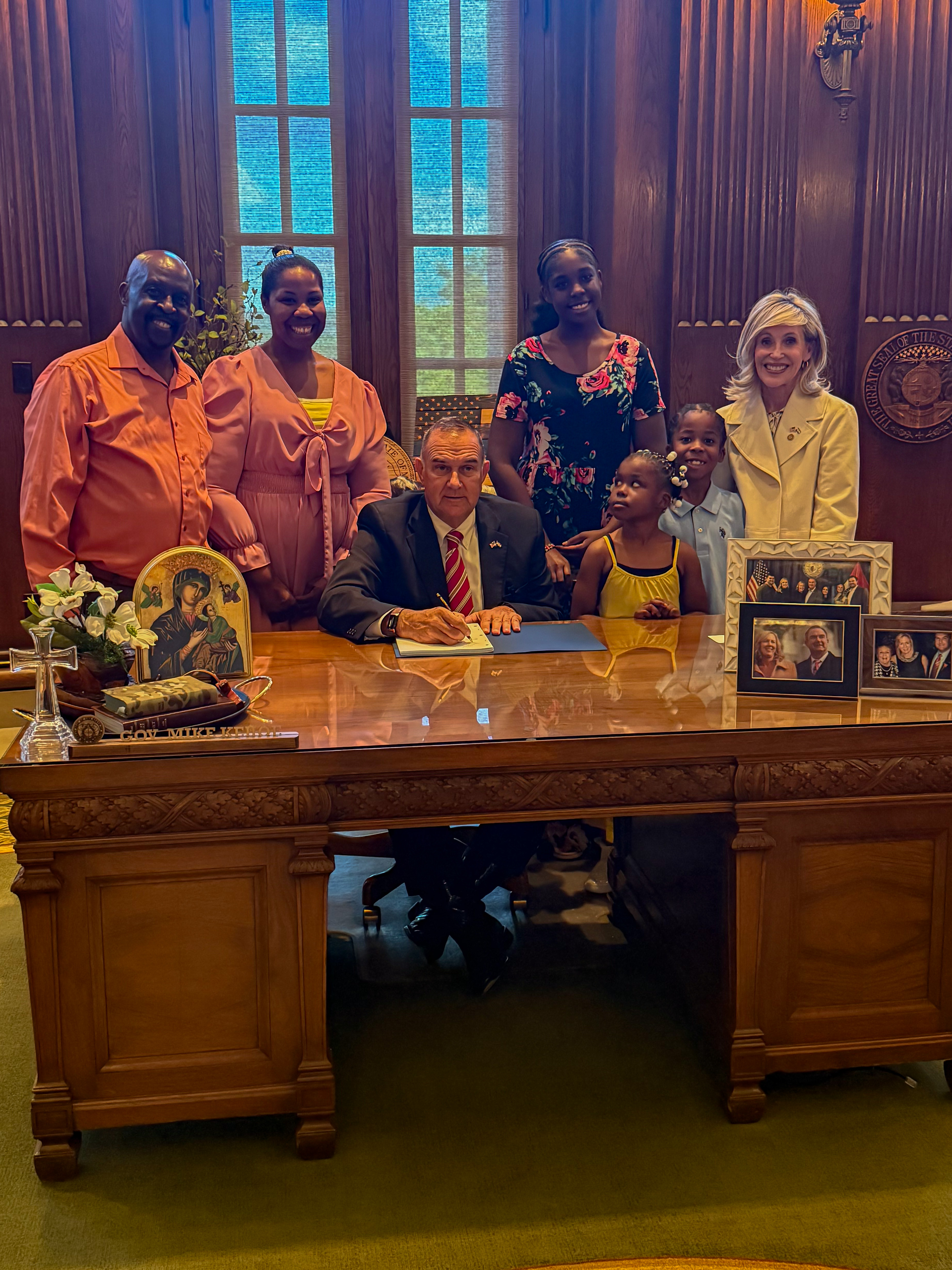
The hard work and time spent at the statehouse paid off when the education omnibus bill containing the remote testing provisions achieved TAFP status and was signed into law by Governor Mike Kehoe on July 9, 2025. The bill signing ceremony was attended by PSO Board member and Missouri advocate Samoy Mainda and her family.
Meanwhile in Iowa, after several years of advocacy on the issue, House File 190 was finally passed this year allowing remote testing for virtual school students.
The bill received strong bipartisan support, with lawmakers on both sides of the aisle hearing directly from Iowa Parents for School Options families.
After a swift and highly engaged advocacy campaign, Governor Kim Reynolds signed the policy into law in early June, opening the door to a more equitable testing experience for families across the state.
Looking Ahead: Remote Testing as a National Priority
These victories are more than state-level success stories, they are proof points in a growing national movement.
- Remote testing works.
- Parents overwhelmingly support it.
- Students perform better because they test in environments aligned with how they learn.
It is imperative that states adopt a testing model that allows students to take high-stakes testing in the setting in which they are most comfortable. PSO will continue advocating for remote testing across the country until every virtual student, no matter their ZIP code, has fair access to the assessments that shape their educational future.


